

Buy your weekday smoothies and get your weekend ones for free. (7 for the price of 5!)
WELLNESSWEEK


Think about the little patch of grass you mow every week but rarely walk on. Maybe it’s a sunny corner by the fence or a strip along the front walk. What would it look like with flowers growing there?
A small patch of lawn can become a flowering space for bees, butterflies, and other garden visitors. Keep the grass you use for picnics, play, or a path through the yard, and start with a spot you can reach easily with a hose or watering can.
Watch the spot for a day before you dig. A corner that looks sunny at breakfast might spend the rest of the day in the shade. Many wildflowers grow best in full sun and soil that drains well. If your chosen spot is shady, look for plants suited to shade.
Try outlining the bed with a garden hose. A simple curve along a walkway or a small bed against a fence can look intentional from the start and leave you with an edge that’s easy to mow around.
Yes. If you’re starting from seed, clear the grass before sowing. Established turf competes with seedlings for light, water, and space. For a small bed, a flat spade is often enough to slice under the sod and lift it out in sections. Remove remaining grass roots and weeds, then rake the exposed soil so it’s ready for planting.
This is the part that makes a small patch so appealing. You can prepare a few square feet, see what grows well, and decide later if you want to make the bed bigger.
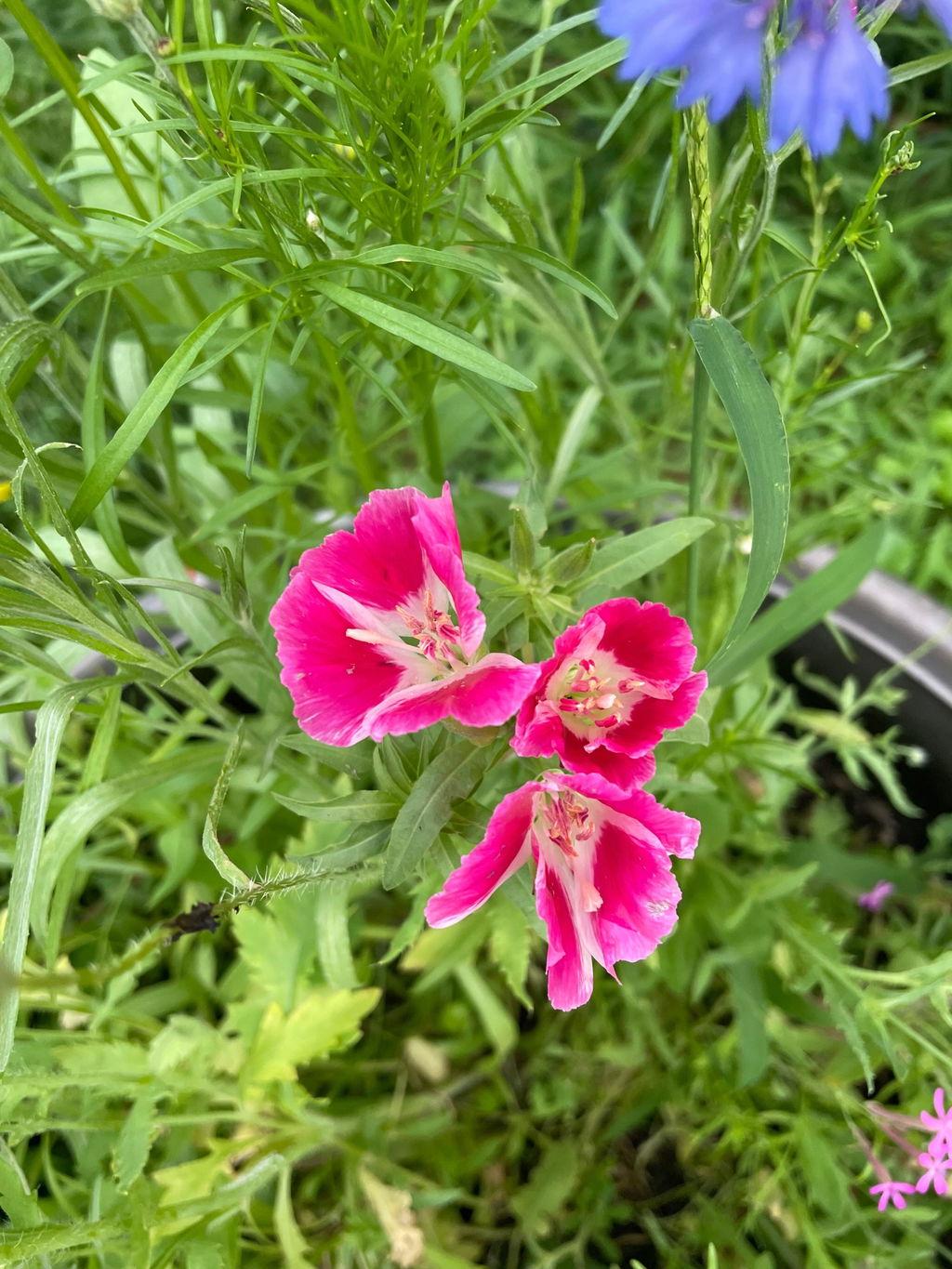
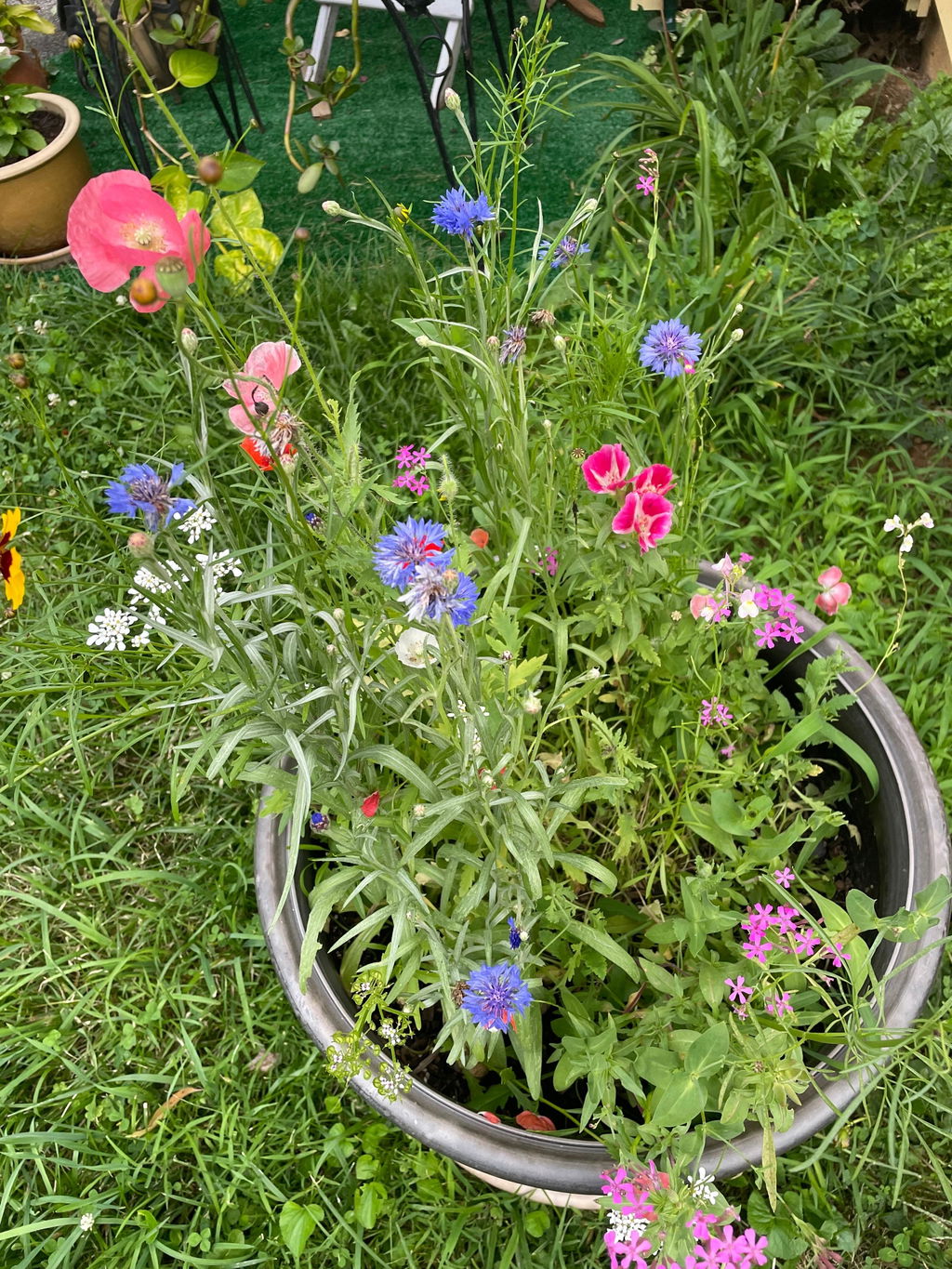
Choose flowers suited to your region, the light in your yard, and the amount of water you can give them. Locally native flowers are a good place to start. If you’re buying a seed mix, check the list of species and their mature heights. Along a front walk, for example, shorter flowers will leave more room to pass.
Look for flowers with different bloom times, too. An early bloomer and a flower that opens later in summer give garden visitors more chances to find food. You can start with just a few varieties and add another when you notice a stretch when little is blooming.
Follow the seed packet for planting season and depth. Some wildflower seeds need only light contact with the soil, while others need a little covering. Water gently so the seeds stay in place, and keep the seedbed moist as directed while they germinate. Check the edges regularly for grass creeping back in. It’s easier to pull a few shoots while they’re small.
Give the bed time to fill in. Annuals can bring color in the first season, while some perennials spend that time getting established before they flower. If a bare patch makes it hard to picture what’s coming, put in a plant marker and take a photo on planting day. You’ll have something to compare when the first flowers open.
The nicest spot to start might be the one you pass every day. A little bed by the front step gives you a chance to notice the first bud, watch a bee work its way across a flower, or see which blooms are still going when the rest of the yard has quieted down.
Get 10% Off Your First Order.